Friday, 16 October 2026

Gosani laid bare to the world the horrors of apartheid jail

Analysis by JABU MAKHOBA

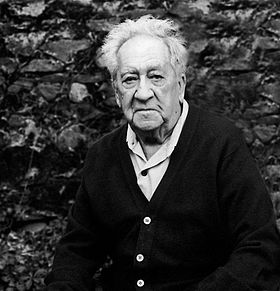
WHO remembers Bob Gosani today: that darling Drum photographer of the roaring '50s and '60s, who became famous for the lenses he used, exposing the atrocities of apartheid to the rest of the world?

It is difficult to answer this rhetorical question; yet it is important to locate Gosani’s impressive photographic work in an epoch in which dedication to a just cause of liberation became a buzzword in journalistic circles of the time.

During those golden years of black journalism—of serious writing of the '50s through the '70s, it became the responsibility of journalists Gosani’s ilk to expose the dirty work of the National Party.

Gosani, unobserved by the hawk-eye of the apartheid police machinery, clambered onto the rooftop of a medical ward opposite the dingy jail that was Number Four.

From this vantage position, with his camera well cocked as one ready to release a round of gunfire on an enemy camp, he zoomed into Number Four prison, less than 100m away in a place that turned out to be a place of great shame, humiliation and horror for African inmates.

In a matter of time, the evil of injunctions that had been hidden from the world was laid bare. This, thanks to the courageous journalism of Gosani, who risked arrest or death.

As it turned out, the Tusas picture of 1954 earned Gosani an overnight arrest. But thank goodness the jail pictures were to become an antidote to ameliorate jail conditions.

The world was horrified and so in their embarrassment, the apartheid political leaders soon jerked into reflex action, forced to tinker with jail conditions as a way of improving them.

Through his pictures, the civilised world saw how savage and callous apartheid was, the grimness and cruelty of it all was exposed.

Standing atop the hospital building, to give the world the image of African inmates performing the “Tusa” dance, a type of strip-search technique that required the African inmate to leap in the air, span arms, and open their legs while clapping hands overhead.

They would descend then to the ground producing clicking sounds from their mouth and bending their bodies forward to expose their rectums to the laughing warders’ gaze for “inspection”.

The dehumanising and humiliating warder routine, a daily insult to “check for contraband and hidden objects inside the inmates' rectums.”

Believed to be one of the oldest buildings in Johannesburg, Old Fort Prison now forms part of the Constitutional Hill precincts and the Constitutional Court, it was built in the late 1890s by Paul Kruger as a military base but later transformed into a prison.

Women were also jailed at the Fort, including political and struggle heroines, like Albertina Sisulu, Deborah Masilela, Florence Mkhize, and poison murderer Daisy de Melher, the second woman in the country to receive the death sentence.

Gosani died at the young age of 28, having been born in 1934. He belonged to the top-class journalism era of the greats, Themba, Casey Motsisi, Stan Motjwadi “Doc” Bikitsha, and many journalism heroes of the time.

The younger folk will not know him nor his work. Better to listen to what the late Bloke Modisane wrote of him: “For the 26 years that Bob actively worked for the media, his pictures documented the social, political and economic aspects of our lives. And what shines through his work is ‘live fast, die young and have a great looking corpse’.”

Gosani may not have seen the dawn of democracy. However, I am certain his heart will be filled with great pride and joy knowing that through his pictures, he laid a stone in the creation of the democratic state.

Jabu Makhoba is a writer at TNA and ANN7.

Friday, 4 September 2026

An Inspirational Young Man


**Extracted text from the article**

**An inspirational young man**  
**NOKUTHULA SONILE**  
nokuthula@caxton.co.za  

A young man from Midrand has risen above the odds and recently graduated with a BA Degree in Journalism from the University of Johannesburg.  

Jabulani Makhoba lost his mother when he was only 12 years old and he and his sister were taken to different orphanages.  

He said, “I never knew my father and have not spoken to my sister in a long time. Besides the Acts of Love, an organisation which belongs to Acts Church, and people I met at places of safety, I was all alone. I don’t know much about my family.”  

The 25-year-old said he was excited to receive an internship at a media house in Johannesburg.  

“My journey in life has not been easy, but now it seems things are starting to look up. Now that I have graduated I want to work as a radio producer and become a brand.”  

He spoke affectionately about Acts of Love, who has paid his rent for a room in Ebony Park, as well as his graduation gown.  

“They practically adopted me in many ways. If it were not for Acts of Love, I may have struggled to get everything I need. I am grateful for all they have done for me.”  

Makhoba emphasised that growing up as an orphan or in places of safety does not have to mean an end to one’s dreams. “It will be hard, but you can be anything you want, the world has people who can assist you become what you dream of,” he said.  

He urged young people to be focused and dedicated, then they can be anything they want to be.  

Acts of Love leader Collin Naidoo said that watching Makhoba receive his degree made him emotional and very proud.  

The organisation helps underprivileged children and youth change their circumstances through their educare programme.  

“This programme is based purely on fundraising and we hope that Makhoba’s story allows corporates to come on board and share in this journey with us,” Naidoo explained.  

**Caption under the main photo:**  
Jabulani Makhoba is confident his future will be bright, in spite of the odds he faced growing up.  

---

**Note:** The article is about **Jabulani Makhoba** (not Jabu Makhoba). It appeared on page 12 of the Community section of the *Midrand Reporter* (www.midrandreporter.co.za).

Tuesday, 27 August 2013

Collect and Sell Rubbish for a Living!

The daily living of the homeless in Johannesburg, South Africa, who work hard for a daily-meal-money out of the trash. The story of rubbish collectors, impoverished individuals and families who have chose to accumulate all recyclable rubbish and scrap in exchange for money.  Some have left their homes in hopes for a better life in the CBDs of Jo'burg. They wake up everyday, in cold mornings to dig and crater every Jozi's household mobile bins and landfill sites or waste rubble, in search for rubbish. These individuals are encouraged by the little amount they obtain from a number of recycle centres around Johannesburg:

From a place they call home (at night)                            (During the day)                                                                                        


""What's there to do, to make money?"""                                          

                    Local waste rubble (Rubbish) "Kasi landfill"


                                                         The selling of waste material


The selection and setting into order of waste material


The recycling process begins (Recycle centre)


The final product (recycled bottles) 


Tuesday, 13 August 2013

Township "(Kasi)" Landscape.

Growing up in the streets of Soweto, township rich with history, best experience of a young man. The up lying slopes of Meadowlands, where everything happened, from; tourists roaming the iconic museums, statues, houses, memorial parks, monuments. Township where a lot of struggle protests and uprisings took place, struggle icons once lived. Soweto, Vilakazi street, is the only street in the world to boast being the home to two Nobel prize winners. Playing soccer in the steep roads was the best moments, Meadowlands is not merely a typical sub-section located in Soweto, the well known house Dj Mahoota hails from Meadowlands, we have "shisanyamas" - best township  restaurants; where one can roast (braai) their own meet and enjoy all types local appetizing, delectable and implicitly exquisite food (Pap and meat). Corner houses, that is where you will find most of "shisanyamas". The picture belong represents right about every memory and experiences about where I was born and raised (My childhood).


Soweto - South-West Townships
The upper slope (street) of Meadowlands zone 9, looking down at Phomolong section. The vertical street, down the road before the curve, boys playing soccer.

Monday, 5 August 2013

The Works of Siskind: Famous, Expressionist Photographer.


(1903 - 1991)

(December 4, 1903 – February 8, 1991) was an American photographer widely considered to be closely involved with, if not a part of, the abstract expressionist movement. - Wikipedia


Aaron Siskind  Born in New York in 1903 attended the College of the City of New York where he first discovered his love for art. He graduated in 1926 and began teaching in the New York public schools. His interest in photography began in the 1930s when he was fascinated by some photographs by members of the Film and Photo League, a group of photographers and film-makers devoted to social change. He joined the group and by 1932 Siskind was an active member and was involved in producing several photojournalistic-series. Read more  (LEE GALLERY)

Legendary Imitation

(On the left): The Long Striped Barks, the mantis like tree in Winter. University of Johannesburg Kingsway (Campus) D-parking  (Jabu Makhoba). (On the right): In 2013,   Mduduzi Mduve X Janda  (friend, cinematographer,  photographer) directed a scene in Soweto. 


The Tree (Aaron Siskind)


 In 1952, renowned photographer Aaron Siskind directed an IIT class in a photographic investigation of Sullivan buildings. Around 60 structures were captured in the work of the students and Siskind, who then mounted the images in a 1954 exhibit. Read more.


Sunday, 4 August 2013

The Path on Earth, Made Easier.

  • Walk way-up (Stairs); next to the Finance Department, University of Johannesburg, Kingsway campus. The distinct look at the stairs, being able to notice a pattern (Vertically packed concrete) but not only a number of blocks to walk your way up. It is easy to walk 'your way up' the ladder of success (Jabu Makhoba).

The Pedestrian walk-way. The long silent path to cross to the other side (Pattern).
Side Walk . In this photograph, it is a paved way, with bricks (Aaron Siskind).


Instagram